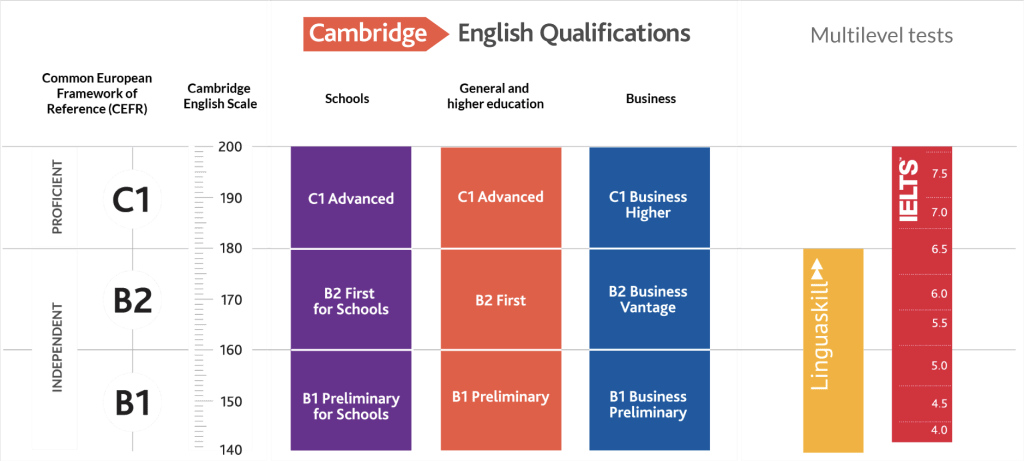
B2 First
B2 First
An individual with a B2 First level of proficiency is ready to negotiate and debate easily and confidently in their communication and interpersonal skills. It is a springboard for further studies, a career abroad, and cross-cultural understanding.
This certification shows that you have the English language abilities needed to successfully navigate daily life, the workplace, or school without constant assistance from others.

TKT: Module 1 (Core module)

Background to language learning and teaching
TKT Module 1 is specifically designed to evaluate candidates’ comprehension of the basics of English language teaching. It assesses the candidates’ knowledge of the terminologies and concepts commonly used in English language teaching. Additionally, this module tests the candidates’ knowledge of the factors that impact English language learning. Undertaking TKT Module 1 allows candidates to showcase their understanding of the fundamental principles of English language teaching.
Who should take TKT Module 1?

Teachers who are new to teaching or have limited experience in teaching English as a second or foreign language

Teachers who are non-native speakers of English and want to improve their language proficiency in the context of teaching English as a second or foreign language

Trainers or mentors who support the professional development of teachers in the field of English language
Module 1 is divided into three parts
Part 1 – Describing language and language skills
This part of Module 1 tests candidates’ knowledge of the terms and concepts common in English language teaching that describe language and its use and language skills.
Candidates need to demonstrate an understanding of concepts and terminology related to:
- Grammar
- Lexis
- Phonology
- Functions
- Language Skills
Part 2 – Background to language learning
This part of Module 1 tests candidates’ knowledge of the factors underpinning the learning of English by speakers of other languages. It focuses on those learner characteristics that distinguish one learner or group of learners from another in terms of their learning and affect what and how a teacher chooses to teach a class or an individual learner. It also tests candidates’ knowledge of the language-learning process and its impact on teaching.
Candidates need to demonstrate an understanding of concepts and terminology related to the following and their implications for the L2 classroom:
- Motivation
- Exposure to language and the focus on form
- The role of error
- The differences between L1 and L2 learning
- Learner characteristics
- Learner needs
Part 3 – Background to language teaching
This part of Module 1 tests candidates’ knowledge of a teacher’s pedagogical choices to cater for learner characteristics, learning processes and the differences between L1 and L2 learning. This part also tests knowledge of concepts and terms related to teaching and learning procedures
and activities, including assessment.
Candidates need to demonstrate an understanding of methods, tasks, activities and terminologies related to:
- Presentation techniques and introductory activities
- Types of activities and tasks for language and skills development
- Assessment types and tasks
TKT: Module 2 (Core module)

Lesson planning and use of resources for language teaching
In TKT Module 2, teachers are assessed on their understanding of the factors they should consider when planning their teaching, including the needs and abilities of their learners, learning objectives, teaching resources, and lesson structure.
Additionally, the module tests various teaching methods, approaches, and techniques teachers use to design engaging and meaningful language lessons promoting language acquisition.
Who should take TKT Module 2?

Teachers who are seeking to enhance their professional development and progress to higher-level qualifications in English language teaching

Teachers who are non-native speakers of English and want to improve their language proficiency in the context of teaching English as a second or foreign language

Trainers or mentors who support the professional development of teachers in the field of English language teaching
Module 2 is divided into two parts
Part 1 – Planning and preparing a lesson or sequence of lessons
This part of Module 2 tests candidates’ knowledge of the relationship between activities and aims. It also tests knowledge of ways of sequencing activities within and across lessons in a manner appropriate to particular groups of learners and selecting appropriate assessment activities to build into (a series of) lessons.
Candidates need to demonstrate an understanding of concepts and terminologies related to:
- Identifying and selecting lesson aims
- Identifying the different components of a lesson plan
- Planning an individual lesson or sequence of lessons
- Choosing assessment activities
Part 2 – Selection and use of resources
This part of Module 2 tests candidates’ knowledge of using resources and materials as well as aids in their lesson planning.
Candidates need to demonstrate an understanding of concepts and terminologies related to the following and their implications for the L2 classroom:
- Using reference resources for lesson preparation
- The selection and use of teaching aids
- The selection and use of coursebook materials
- The selection and use of supplementary materials and activities
TKT: Module 3 (Core module)

Managing the teaching and learning process
TKT Module 3 tests teachers’ ability to create a positive learning environment, manage classroom dynamics, and facilitate effective communication between themselves and their learners.
They must also understand how to encourage learner participation, monitor learner progress and adapt their teaching methods to meet the diverse needs of their students.
Who should take TKT Module 3?

Teachers who are seeking to enhance their professional development and progress to higher-level qualifications in English language teaching

Teachers who are non-native speakers of English and want to improve their language proficiency in the context of teaching English as a second or foreign language

Trainers or mentors who support the professional development of teachers in the field of English language teaching
Module 3 is divided into two parts
Part 1 – Teachers’ and learners’ language in the classroom
This part of Module 3 tests candidates’ knowledge of the functions of classroom language, and how to adapt teacher language according to its audience and purpose. It also tests candidates’ knowledge of the appropriacy of teachers’ classroom language, how to analyse learners’ language and categorise learners’ errors.
Candidates need to demonstrate an understanding of concepts and terminologies related to:
- The functions commonly used by a teacher in the classroom
- Identifying the functions of language used by learners in the classroom (tasks may involve analysis of learner language, which is not completely accurate)
- Categorising learners’ mistakes
Part 2 – Classroom management
This part of Module 3 tests candidates’ knowledge of the range and function of strategies available to a teacher for managing classes in ways appropriate to learners, teaching and learning aims. These include a variety of activities and paces, methods of grouping learners, techniques for correcting learners’ mistakes and the roles a teacher can fulfil at different stages of a lesson.
Candidates need to demonstrate an understanding of concepts and terminologies related to the following and their implications for the L2 classroom:
- The roles of a teacher
- Classroom management
- Grouping learners
- Correcting learners
- Giving feedback
TKT: YL (Specialised module)

Teaching young learners
TKT: YL tests teaching professionals on their understanding of how young learners learn and develop language and cognitive skills. It covers various topics, including language acquisition, age-appropriate teaching methodologies, assessment, and classroom management strategies.
This qualification provides an internationally recognised certification that verifies their skills and knowledge, giving them a competitive edge in the job market.
Who is TKT YL for?

Teachers who work with young learners (children aged 6-12 years)

Teachers who want to improve their teaching skills and knowledge of teaching young learners

Teachers who teach English as a second or foreign language to young learners

Teachers who work in primary schools or language schools that offer English courses to young learners

Teachers who want to demonstrate their proficiency in teaching young learners
TKT: YL is divided into four parts
Part 1 – Knowledge of young learners and principles of teaching English to young learners
This part of the TKT: YL module tests candidates’ knowledge of children’s characteristics as language learners and how language learning can help young learners develop learning strategies, cognitive strategies and communication strategies.
- Children’s characteristics as language learners (theory focused)
- Developing children’s learning strategies through language learning
- Developing children’s cognitive strategies through language learning
- Developing children’s communication strategies through language learning
Part 2:- Planning and preparing young learner lessons
This part of the TKT: YL module tests candidates’ knowledge of planning and preparing language lessons for young learners.
- Lesson plans (components/ headings)
- Providing support and challenge when selecting and using coursebooks and supplementary materials
- Additional resources – Selecting, adapting and supplementing.
Part 3 – Teaching young learners
This part of the TKT: YL module tests candidates’ knowledge of strategies for teaching language to young learners.
- Scaffolding children’s understanding of language and use of language through the teacher’s language
- Scaffolding through teaching strategies
- Using practice activities to consolidate children’s language learning
- Managing young learners in the classroom
Part 4 – Assessing young learners learning through classroom-based assessment
This part of the TKT: YL module tests candidates’ knowledge of assessing young learners learning in the classroom and how to respond to the information provided by classroom assessment.
- Purposes of different types of classroom-based assessments
- The focus of different kinds of classroom-based assessments
- Acting on classroom-based assessment evidence
TKT: CLIL (Specialised module)

Content and language-integrated learning
This module tests knowledge of the aims and rationale of a CLIL approach. It covers the planning, teaching and assessment of CLIL. It also focuses on teachers’ awareness of learning demands and support strategies for learners in CLIL programmes.
Who is TKT CLIL for?

Teachers who teach academic subjects in a foreign language

Teachers who work in bilingual or immersion programmes

Teachers who teach English as a medium of instruction

Teachers who want to improve their teaching skills and knowledge of content and language- integrated learning
TKT: CLIL is divided into four parts
Part 1- Knowledge of CLIL and principles of CLIL
This part of the TKT: CLIL module tests candidates’ knowledge of a CLIL approach and the learning, cognitive, language and communication skills across the curriculum.
- Aims of and rationale for CLIL knowledge
- Language across the curriculum
- Communication skills across the curriculum
- Cognitive skills across the curriculum
- Learning skills across the curriculum
Part 2 – Lesson preparation
This part of the TKT: CLIL module tests candidates’ knowledge of planning, teaching and assessing curricular subjects taught in the English medium.
- Planning a lesson or a series of lessons
- Language demands of subject content and accompanying tasks
- Resources, including multimedia and visual organisers
- Materials selection and adaptation
- Activity types and their purposes
Part 3 – Lesson delivery
Possible testing focus
- Classroom language
- Scaffolding content and language
- Methods to help learners develop learning strategies
- Consolidating learning and differentiation
Part 4 – Assessment
Possible testing focus
- Focus of assessment
- Types of assessment
- Support strategies
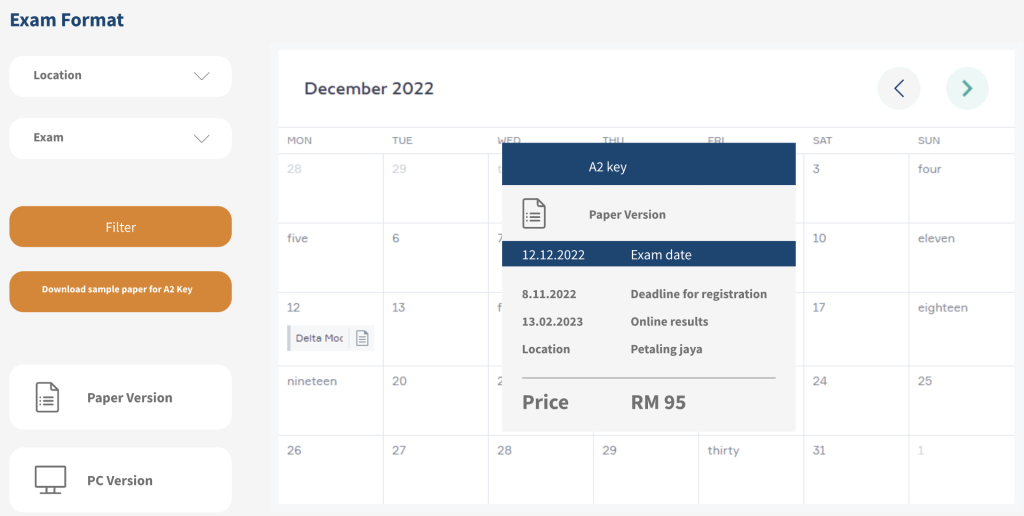
Exam calendar & registration

Nail your Cambridge English exams with our official preparation materials

Latest blog
It seems we can't find what you're looking for.